About Studio City
Studio City: Where the Entertainment Industry Built a Neighborhood
Few Los Angeles neighborhoods are as closely tied to the entertainment industry as Studio City. While many communities in Los Angeles developed around rail lines, oil fields, agriculture, or postwar housing tracts, Studio City grew from a movie studio.
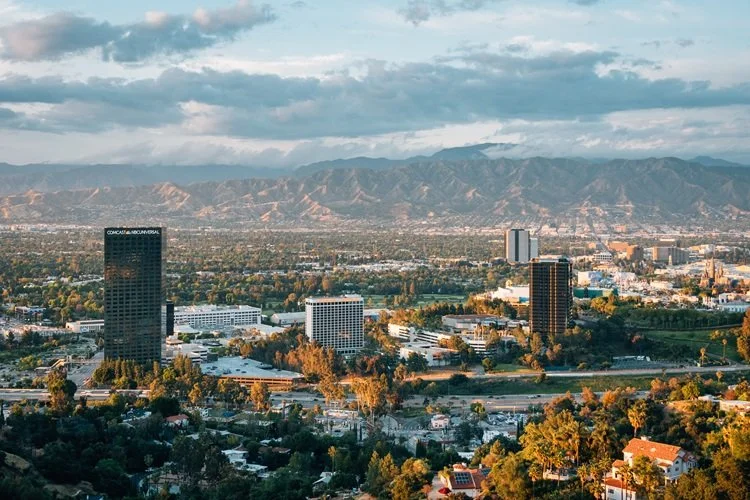
Today, Studio City occupies a unique position within Los Angeles. Located in the southeastern San Fernando Valley, just beyond the Cahuenga Pass, it combines the convenience of city living with the residential character of an established suburban neighborhood. It offers tree-lined streets, architecturally diverse homes, walkable commercial corridors, hillside estates, and a direct connection to the film and television industry that helped shape Southern California.
For homebuyers, Studio City represents one of the Valley's most desirable addresses. For historians, it remains one of the clearest examples of how Hollywood transformed Los Angeles from a growing regional city into a global cultural capital.
From Ranchland to Studio City
Before becoming one of Los Angeles' premier residential neighborhoods, the area that is now Studio City was largely agricultural land within the San Fernando Valley. Like much of the Valley, development accelerated after the completion of the Los Angeles Aqueduct in 1913, which provided the water necessary for large-scale growth.
The neighborhood's defining moment came in the late 1920s when legendary filmmaker Mack Sennett purchased property near what is now Ventura Boulevard and Radford Avenue. Sennett was already famous throughout the film industry as the creator of the Keystone Cops and one of the pioneers of silent film comedy. Earlier in his career, he had helped launch or nurture the careers of figures such as Charlie Chaplin, Gloria Swanson, Roscoe "Fatty" Arbuckle, W.C. Fields, and Harold Lloyd.
In 1928, Sennett transformed what had been agricultural land into a state-of-the-art motion picture production facility. The studio became known as Mack Sennett's Studioland and quickly established itself as an economic anchor for the surrounding community. Residential development followed, and the growing neighborhood adopted a name that reflected its identity: Studio City.
The studio itself evolved over time, becoming Mascot Pictures, then Republic Studios, later CBS Studio Center, and today the Radford Studio Center. Through every transition, the facility remained one of the most important production centers in Los Angeles and a defining feature of the neighborhood.
Hollywood's Valley Neighborhood
Unlike Beverly Hills, Bel Air, or Holmby Hills, Studio City was never designed as an exclusive enclave for celebrities. Instead, it developed as a working neighborhood for people employed in the entertainment industry.
Writers, directors, producers, editors, cinematographers, performers, and executives found Studio City particularly appealing because it offered proximity to major studios while maintaining a more relaxed residential atmosphere than Hollywood itself. The result was a neighborhood where industry professionals could live, work, and socialize without leaving the community.
That connection continues today. Many residents still work in film, television, music, advertising, and digital media. The neighborhood remains closely connected to nearby entertainment centers including Universal Studios, Warner Bros., Disney, and the Radford Studio Center itself. Its location provides easy access to both Hollywood and the Westside while maintaining a distinctly Valley character.
Writers, Actors, and Notable Residents
Studio City's appeal has long attracted creative professionals.
The neighborhood has been associated with generations of actors, producers, directors, musicians, and writers who appreciated its privacy and accessibility. Throughout the twentieth century, many television and film professionals chose Studio City because it allowed them to live near production facilities without the visibility that often accompanied more celebrity-oriented neighborhoods.
The area's strongest historical connection may be to television. For decades, productions filmed at Republic Studios, CBS Studio Center, and later Radford Studio Center helped make Studio City a center of television production. Classic series including The Mary Tyler Moore Show, Rhoda, Lou Grant, Gilligan's Island, and later productions such as Seinfeld all maintained connections to the studio lot that gave the neighborhood its name.
Many successful television writers have also gravitated toward Studio City. The neighborhood's combination of quiet residential streets and easy access to studios made it especially attractive for screenwriters seeking both inspiration and convenience.
In many ways, Studio City remains one of Los Angeles' great "industry neighborhoods"—a place where creative professionals continue to live and work behind the scenes of the entertainment business.
Ventura Boulevard: The Community's Main Street
No discussion of Studio City is complete without Ventura Boulevard.
Stretching east-west through the heart of the neighborhood, Ventura Boulevard serves as Studio City's commercial spine. Unlike many suburban corridors, Ventura Boulevard maintains a distinctly local character. Restaurants, cafés, boutiques, bookstores, fitness studios, and neighborhood businesses create an active pedestrian environment that contributes significantly to the area's appeal.
The boulevard evolved alongside the entertainment industry, becoming a gathering place for actors, writers, producers, and local residents. Over time it developed into one of the Valley's most recognizable commercial districts.
While Los Angeles is often criticized for lacking walkable neighborhoods, portions of Studio City offer a surprisingly pedestrian-friendly experience. Residents can often walk to coffee shops, restaurants, grocery stores, and local services, creating a lifestyle that feels more connected than many other parts of the Valley.
The Architecture of Studio City
One of Studio City's most compelling qualities is its architectural diversity.
Unlike master-planned communities that were largely built during a single period, Studio City developed gradually over many decades. As a result, the neighborhood contains an unusually broad collection of architectural styles.
Spanish Revival and Mediterranean Homes
Many of Studio City's most charming residences date from the 1920s and 1930s, when Spanish Colonial Revival architecture dominated Southern California design.
These homes often feature white stucco exteriors, red clay tile roofs, arched doorways, decorative ironwork, interior courtyards, and lush landscaping. Influenced by California's Spanish and Mediterranean heritage, these properties remain among the most sought-after homes in the neighborhood.
Many original examples can still be found on the neighborhood's established residential streets and lower hillside areas.
Traditional and Colonial Revival Architecture
The late 1930s and early 1940s introduced Colonial Revival and traditional American architectural styles to Studio City.
The Agnes Avenue Residential Historic District provides an excellent example of this period. Developed during the neighborhood's early growth, the district features well-preserved Colonial Revival homes that reflect Studio City's transition from a studio-centered community into a mature residential neighborhood. The district also highlights the area's close relationship with the entertainment industry, as many early residents were connected to film production and studio management.
These homes typically feature symmetrical façades, multi-pane windows, traditional detailing, and formal floor plans that remain highly desirable today.
Mid-Century Modern Influences
The postwar years brought another architectural layer to Studio City.
As Los Angeles embraced modernism, many hillside properties were developed with Mid-Century Modern homes designed to capture views and maximize indoor-outdoor living. Open floor plans, walls of glass, exposed beams, and seamless connections to patios and pools became defining characteristics.
Studio City's proximity to Hollywood made it particularly attractive to architects and entertainment professionals interested in progressive residential design.
Many of these homes continue to attract buyers seeking authentic California modernism.
Contemporary Development
Recent decades have introduced a substantial number of new construction residences.
Large contemporary homes now occupy many of Studio City's most desirable streets. These properties often feature dramatic open interiors, floor-to-ceiling glass, expansive outdoor entertaining spaces, home theaters, and modern luxury finishes.
While some longtime residents lament the replacement of smaller original homes, others view the evolution as part of Studio City's ongoing transformation. The neighborhood today presents an architectural mix that ranges from 1920s Spanish cottages to modern estates exceeding 8,000 square feet.
Hillside Estates and Canyon Properties
The southern portion of Studio City climbs into the Hollywood Hills, creating some of the neighborhood's most prestigious residential enclaves.
Areas near Fryman Canyon, Laurelwood, and the foothills below Mulholland Drive feature larger lots, winding streets, mature trees, and sweeping views. These hillside properties offer a level of privacy rarely found elsewhere in Los Angeles while maintaining convenient access to Ventura Boulevard and nearby employment centers.
For many buyers, these hillside neighborhoods represent the ideal balance between urban accessibility and residential retreat.
Nature, Open Space, and the Los Angeles River
Although Studio City is closely associated with the entertainment industry, natural features play a significant role in defining its character.
The Los Angeles River and Tujunga Wash converge near the Radford Studio Center, creating a physical connection between the neighborhood's industrial and natural landscapes.
The surrounding hills provide access to some of Los Angeles' most popular hiking destinations, including Fryman Canyon and nearby open space preserves. These recreational opportunities contribute significantly to Studio City's quality of life and help explain its enduring popularity among residents.
The ability to hike in the morning, work in Hollywood or Burbank during the day, and return to a quiet residential neighborhood in the evening remains one of Studio City's defining advantages.
Studio City's Place Within Los Angeles
Studio City occupies a unique geographic and cultural position within Los Angeles.
Located immediately west of Universal City and just beyond the Hollywood Hills, it functions as a gateway between the San Fernando Valley and the Los Angeles Basin. This location has historically made it attractive to residents seeking access to multiple employment centers.
Unlike many Valley communities that developed primarily after World War II, Studio City's roots reach back to the earliest decades of Hollywood's expansion. As a result, it possesses a depth of history and architectural character that distinguishes it from many neighboring communities.
Its evolution mirrors the broader story of Los Angeles itself: agricultural land transformed by infrastructure, shaped by the entertainment industry, and ultimately developed into one of the world's most recognizable urban regions.
Why Studio City Remains One of Los Angeles' Most Desirable Neighborhoods
Nearly a century after Mack Sennett established the studio that gave the neighborhood its name, Studio City continues to rank among the most sought-after communities in Los Angeles.
Its appeal stems from a combination of factors that are increasingly difficult to find in a single neighborhood: architectural diversity, walkability, proximity to employment centers, access to nature, excellent residential streets, and a genuine sense of history.
Studio City offers buyers a connection to Los Angeles' creative legacy while providing the practical benefits of modern urban living. From Spanish Revival homes built during Hollywood's golden age to contemporary hillside estates overlooking the Valley, the neighborhood presents an extraordinary range of housing opportunities.
Most importantly, Studio City has retained its identity. While Los Angeles continues to evolve, the neighborhood remains what it has been for nearly one hundred years: a community shaped by creativity, connected to the entertainment industry, and distinguished by its enduring residential character.
Meta Description: Explore the history of Studio City, Los Angeles, from its origins as a movie studio town to one of the Valley's most desirable neighborhoods. Learn about its architecture, notable residents, Hollywood connections, and unique character.
Interested in learning more about Studio City?
Get in touch with David Rosen to learn more about upcoming listings and local real estate trends.