
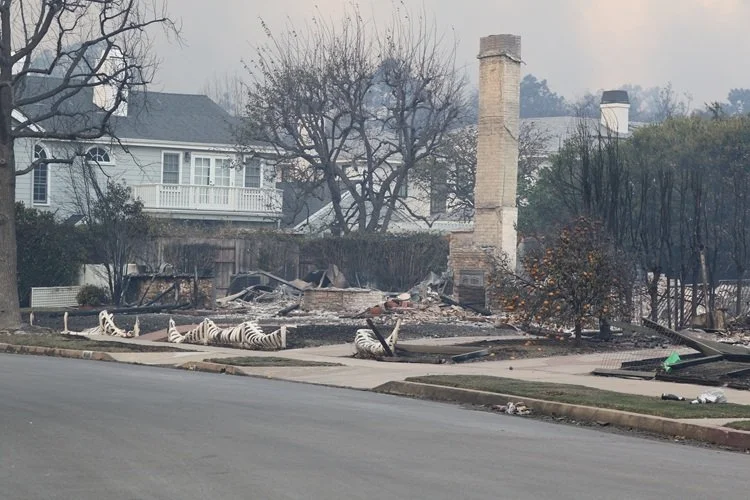
Buying a home in Los Angeles has always required careful evaluation of location, price, and property condition. In 2026, however, buyers are paying increasing attention to something that historically received less focus: environmental exposure.
Wildfire risk, air quality, seismic stability, drought conditions, and insurance availability are now regular parts of the conversation when evaluating a property. These factors do not necessarily make a home undesirable, but they do influence long-term costs, livability, and resale value.
Buyers who understand the environmental realities of Los Angeles are better equipped to assess whether a property represents true value — a concept discussed further in How Buyers Evaluate Value in the Los Angeles Market
Below are the most important environmental considerations buyers should understand before purchasing a home in Los Angeles in 2026.
Wildfire Risk and High Fire Hazard Severity Zones
Large portions of Los Angeles are located near foothills, canyons, and wildland areas. These regions often fall within Very High Fire Hazard Severity Zones, which are mapped by the state based on vegetation, topography, weather patterns, and fire history.
Neighborhoods commonly associated with higher wildfire exposure include areas such as:
Hollywood Hills
Laurel Canyon
Topanga
Pacific Palisades
Parts of Studio City and Sherman Oaks
Foothill communities near Pasadena and Altadena
For buyers considering homes in these areas, wildfire risk primarily affects insurance availability and property maintenance.
Many insurance carriers now carefully evaluate homes in fire zones. Buyers may encounter:
Higher premiums
Coverage limitations
Requirements for defensible space around the home
Requirements for fire-resistant roofing and building materials
None of this means that hillside properties are poor investments. In fact, many of Los Angeles’ most desirable homes are located in these areas. However, buyers should simply factor wildfire exposure into their long-term ownership planning.
Air Quality and Proximity to Freeways
Los Angeles air quality has improved dramatically over the past several decades, but localized pollution still varies significantly by neighborhood.
Homes located very close to major freeways such as the 405, 101, 5, or 10 may experience higher levels of particulate pollution from vehicle traffic. Research suggests that properties located within a few hundred feet of major freeways can experience higher concentrations of airborne particles.
For most buyers, this becomes a quality-of-life consideration rather than a safety issue. However, buyers with respiratory sensitivities, families with young children, or those who simply prioritize quieter environments may prefer homes located further from high-traffic corridors.
Noise is often part of this conversation as well. Even homes several blocks away from a freeway can experience traffic noise depending on topography and wind patterns.
When evaluating these properties, buyers should consider both air exposure and livability factors such as sound and neighborhood character.
Seismic Risk and Soil Conditions
Living in Southern California means living with earthquakes. What matters more than proximity to a fault line is how a particular home is built and how the soil beneath it behaves during seismic activity.
Certain areas of Los Angeles sit on softer soils that may experience liquefaction, where saturated soil temporarily behaves like liquid during strong shaking. Hillside properties, meanwhile, may face different risks related to slope stability.
Older homes built before modern building codes may also benefit from seismic retrofits. Common upgrades include:
Foundation bolting
Cripple wall bracing
Reinforced structural framing
These improvements are often relatively modest investments that significantly improve a home’s structural resilience.
When evaluating older homes, buyers should ask whether retrofitting work has already been completed.
Flood Zones and Drainage Concerns
Despite Los Angeles’ reputation for drought, heavy rain events occasionally create localized flooding.
Flood risk typically affects homes located near:
The Los Angeles River
Low-lying basins
Coastal areas
Certain valley neighborhoods with historically poor drainage
Even properties outside official flood zones may still experience site-specific drainage issues, especially on lots with improper grading.
During property inspections, buyers should look for signs of:
Poor water runoff
Basement or crawlspace moisture
Retaining wall movement
Soil erosion
Drainage improvements can usually be addressed, but identifying them early helps buyers avoid surprises after closing.
Drought and Water Use Considerations
Water management continues to be a major long-term consideration throughout California. Many Los Angeles homeowners have transitioned toward drought-tolerant landscaping, which reduces water usage while remaining visually appealing.
Buyers should evaluate:
Irrigation systems
Landscape design
Water-efficient fixtures
Overall maintenance requirements of the yard
Large lawns, while attractive, may require higher water usage and more maintenance. In contrast, modern drought-resistant landscaping tends to be both environmentally sustainable and easier to maintain.
These features can also appeal to future buyers, which may positively affect resale value.
Urban Heat and Energy Efficiency
Another emerging environmental consideration is urban heat exposure. Certain parts of Los Angeles experience higher temperatures due to dense development and limited tree canopy.
Homes that lack adequate insulation, efficient windows, or modern HVAC systems may be less comfortable during summer heat waves and may carry higher cooling costs.
Buyers increasingly pay attention to energy efficiency features such as:
Double-pane windows
Modern insulation
Updated air-conditioning systems
Solar installations
Properties that incorporate these features tend to attract stronger buyer interest. This is part of a broader shift toward homes that are move-in ready and energy efficient, which is also discussed in Preparing Your Los Angeles Home for Today’s Buyers
Historical Land Use and Environmental History
Los Angeles has a long history of industrial activity, including oil production, manufacturing, and rail transport. While most residential neighborhoods are unaffected, some areas have undergone redevelopment after industrial use.
In certain cases, buyers may want to review:
Historical land use records
Environmental remediation documentation
Nearby industrial zoning
These issues are uncommon for standard residential purchases, but awareness of neighborhood history can still provide useful context.
Insurance and Environmental Risk in 2026
Perhaps the most practical impact of environmental considerations today involves insurance availability and pricing.
Insurance companies now evaluate properties based on factors such as:
Fire exposure
Flood risk
Property age and materials
Proximity to emergency services
In some higher-risk areas, buyers may need specialized policies or higher deductibles. Understanding insurance costs early in the buying process can help avoid surprises later.
These considerations also influence how buyers evaluate value and pricing — particularly in competitive markets — which ties into the broader strategy discussed in Pricing Your Los Angeles Home Correctly in 2026
Final Thoughts
Environmental considerations are now a normal part of evaluating Los Angeles real estate. From wildfire exposure and seismic resilience to air quality and water usage, buyers increasingly want a clear understanding of how a property fits within its surrounding environment.
The key takeaway is not that environmental risk should deter buyers. Rather, it should inform smarter decisions.
Los Angeles remains one of the most dynamic and desirable housing markets in the country. Buyers who understand both the opportunities and the environmental realities of the region are best positioned to make confident, long-term investments in their homes.


Compare condos and single-family homes in Los Angeles, including purchase prices, HOA dues, maintenance, insurance, assessments, financing, and long-term affordability.